Leak Detection in Milsons Point
1000+ five-star reviews
Hidden water is the fault most likely to cost an apartment owner serious money, and Your Plumber Milsons Point traces it with proper detection equipment, then fixes it under a fixed written price.
- $0 Call Out Fee
- Lifetime Labour Warranty
- Licensed & Insured
- Lic #275278C
- Licensed & Insured
- $0 Call Out Fee
- Lifetime Labour Warranty
- On-Site Fast, 24/7
- 1000+ five-star reviews
- Real Humans Answer, Day or Night
- Lic #275278C
- Licensed & Insured
- $0 Call Out Fee
- Lifetime Labour Warranty
- On-Site Fast, 24/7
- 1000+ five-star reviews
- Real Humans Answer, Day or Night
- Lic #275278CNSW plumbing licence, fully insured, water and gas
- $0 Call Out FeeIt costs nothing to get us to your door
- Lifetime Labour WarrantyIf it's not right, we come back. No questions. No cost.
- 1000+ five-star reviewsSydney homeowners have rated us five stars over a thousand times
A real person answers, day or night
A water stain on a ceiling is a clue, not the whole story
By the time a stain appears, water has usually been travelling for weeks through a slab, a wall cavity or a shared riser. The team at Milsons Point finds where it started, not just where it ended up, and that difference decides whether the repair holds.
Rendered walls, shared risers and faults you cannot see
- The 1930s supply is still working The suburb's surviving art deco walk-ups carry original galvanised risers and branch lines, furred up over nine decades and now pinholing behind rendered walls, where nothing is visible until the paint blisters.
- Almost everything is shared With the suburb packed into 0.2 square kilometres of nearly all-apartment housing, a leaking line frequently serves or passes several dwellings, so guessing at the source risks opening the wrong wall entirely.
- Salt air accelerates the failure Harbour-edge exposure and southerlies off the water corrode exposed pipework and balcony connections faster than inland streets, turning slow weeps into active faults between one winter and the next.
How we find what the eye cannot
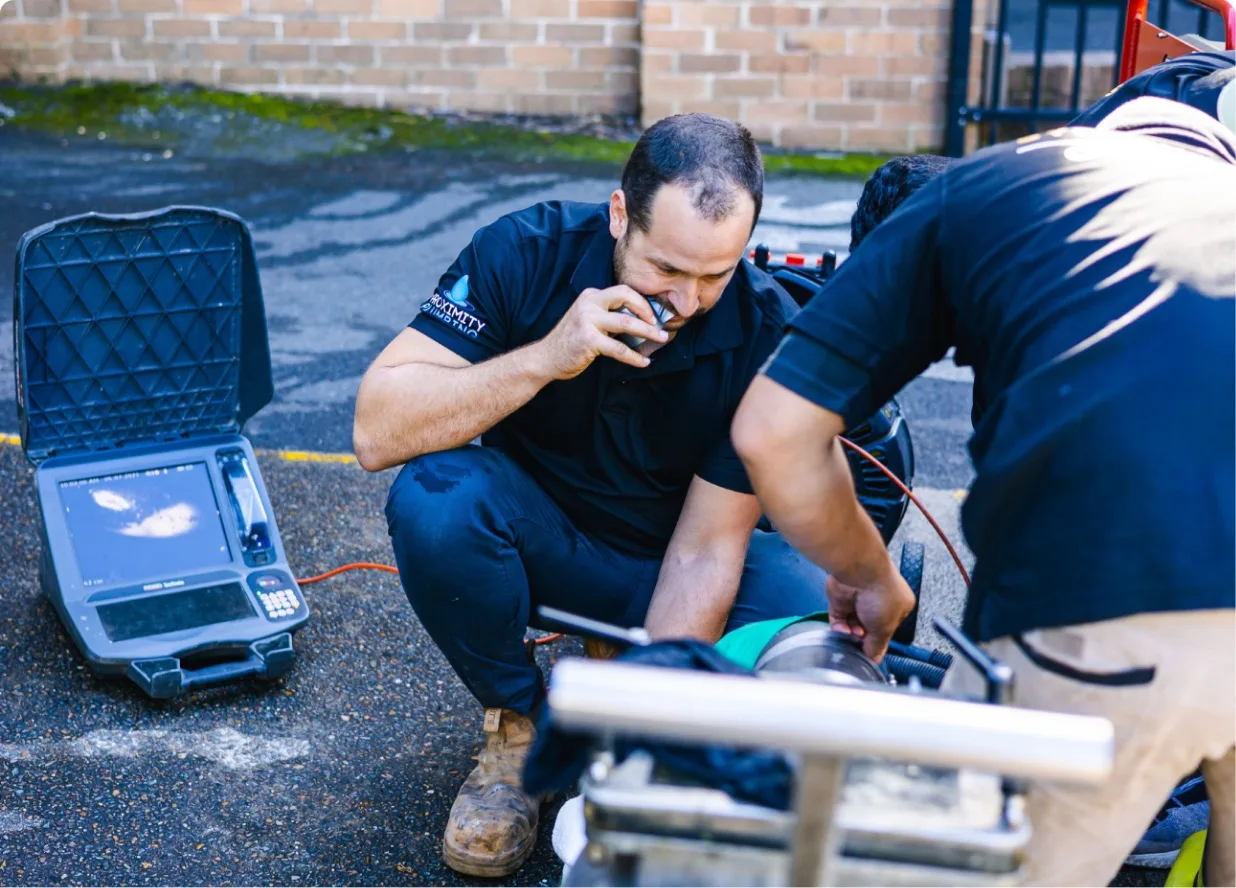
Detection is a discipline, not a guess, and the gear on the van does the listening, seeing and measuring before a single tile comes off. Each method earns its place on a different kind of fault, and most jobs need only one or two.
Acoustic listening
Acoustic listening gear amplifies the faint sound water makes as it escapes a pressurised pipe, which lets us pinpoint a pinhole behind rendered walls without opening a single tile, marking the exact fault location carefully before any repair work begins.
Thermal imaging
Thermal imaging cameras read temperature differences across a wall or slab, so a single warm patch from a hot water line or a cool damp zone from a riser leak shows itself clearly anywhere without lifting floorboards or drilling holes.
Pressure testing
Pressure testing isolates sections of your supply one at a time, and a gauge that creeps down tells us which line is losing water, separating your unit's pipes from the building's shared risers before anyone talks about who pays what.
Tracer gas and reporting
Tracer gas and moisture meters confirm the stubborn ones, and every job ends with photographs and a written report your strata committee or insurer can act on, which matters enormously when the leak sits inside property the whole building shares.
Boom-era fittings, hidden in the walls since the nineties
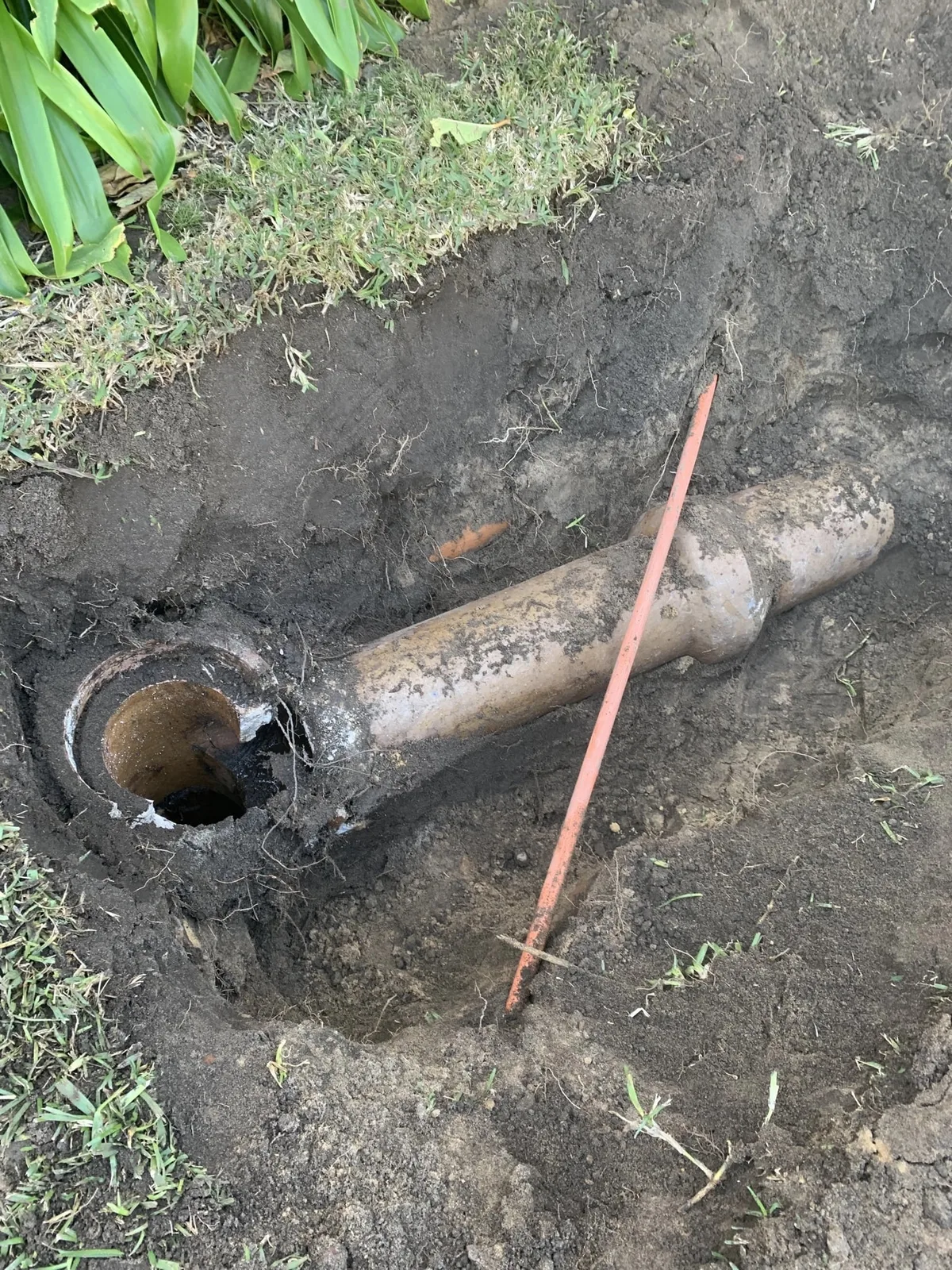
- The legacy of the boom The strata towers thrown up between the station and the harbour through the 1990s carry budget fittings and quick connections installed behind walls that were never meant to be opened again, and three decades on those shortcuts are surfacing as leaks between floors.
- Why guessing is expensive Because the fittings sit in risers and ceiling spaces with no access panels, the first sign is usually a complaint from the downstairs neighbour rather than the unit above, so detection pays for itself long before anyone starts breaking tiles.
- The early warning worth heeding A slow meter creep overnight, with every tap closed and nothing running, is worth a phone call long before any stain appears on a ceiling.
The leaks we trace most often
Pinholed 1930s pipework
Galvanised risers in the interwar blocks corrode from the inside out, shedding rust until the wall of the pipe thins through, and the first sign upstairs is a pressure drop or a damp patch nobody can explain, which detection locates without stripping render.
Leaks between floors
Boom-era towers hide budget fittings in ceiling and riser spaces, and when one lets go the damage shows in the apartment below, so tracing the true source quickly stops a one-unit repair becoming a multi-unit insurance claim.
Mystery pressure loss
Low pressure with no visible leak usually means water is escaping somewhere you cannot see, and systematic isolation testing finds whether the loss sits in your branch line, a building riser or the street main before repairs are quoted.
Why acting early matters
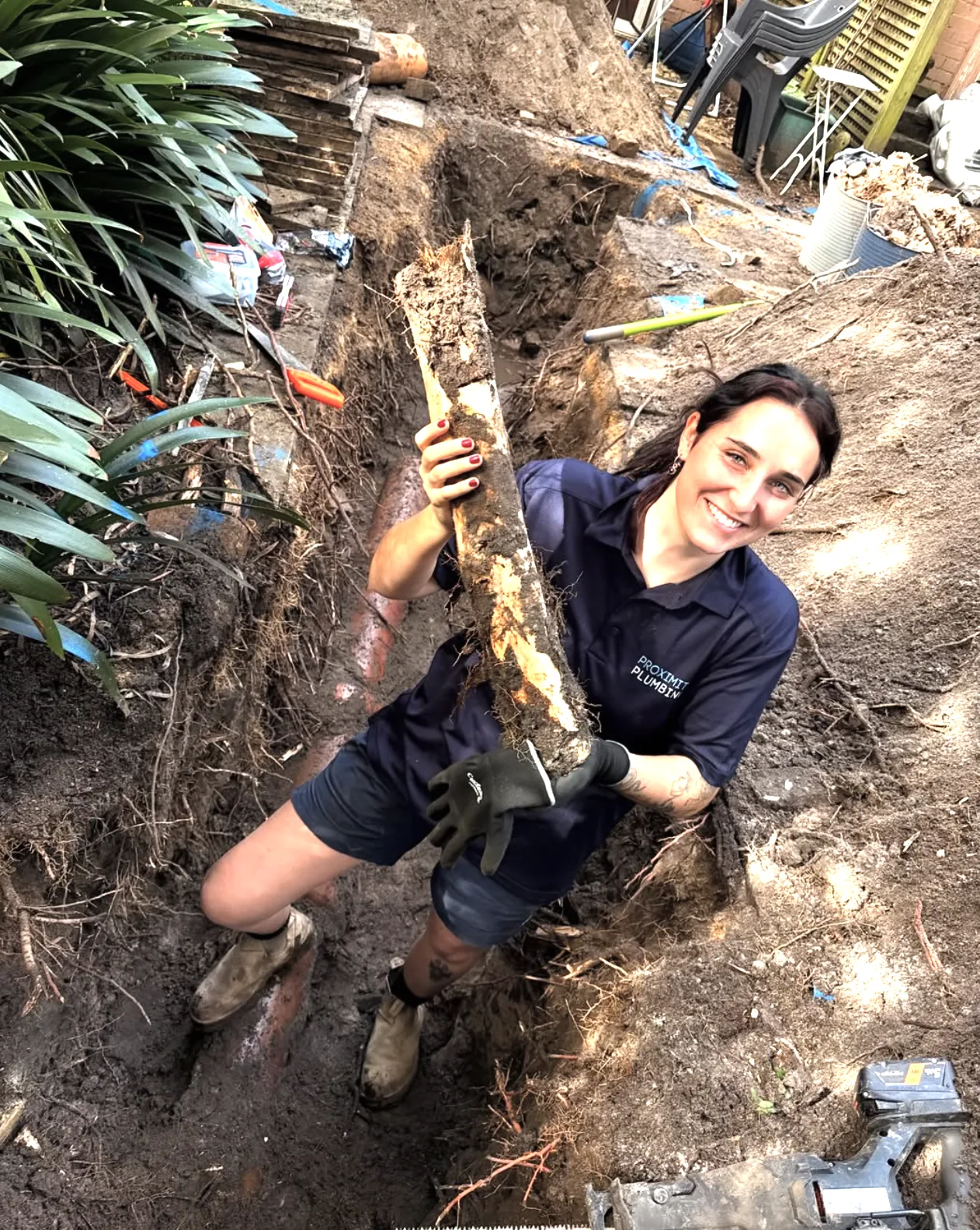
- Water moves downhill and so does the bill In a strata building a weeping pipe rarely stays your problem, travelling through the slab into the ceiling below until a modest repair becomes a claim involving several owners.
- Render hides damage beautifully By the time a 1930s wall shows a stain, the pipe behind has often been weeping for months, and the longer galvanised stays wet the faster the rest of the line corrodes.
- Documentation protects you A traced, photographed, written diagnosis gives your committee and insurer a clear account of where the fault sat, which quietly settles the question of who pays for what.
How it works
Our leak detection process, step by step
- 01
Call and tell us
Ring (02) 9072 0528 and describe what's happening, and a licensed plumber, not an answering machine, will tell you what it likely means, what to stop using, and when we can realistically be there.
- 02
Quote before work
Your plumber inspects the job properly, runs whatever diagnosis it genuinely needs, and hands you a single fixed written price covering the complete fix, with a $0 call out fee and nothing added afterwards.
- 03
Trace and confirm the fault
We run the detection method the symptoms point to, whether acoustic, thermal or pressure based, mark the exact location, and walk you through photographs of what the equipment found, along with the repair options and what each involves, so the decision is yours with full information.
- 04
Backed for life
Everything we complete is covered by our Lifetime Labour Warranty, the promise that outlasts the job itself: if it's not right, we come back. No questions. No cost.
Why choose Your Plumber Milsons Point
Fixed prices, kept
Every job is priced upfront in plain writing before any work starts, the invoice always matches that number, and weekend or late-evening timing changes nothing, because overtime rates simply don't exist here.
Licensed and insured
Your Plumber Milsons Point works under licence #275278C with full insurance behind every job, and the compliance certificates that protect your home's paperwork trail arrive with the invoice, without you ever needing to ask for them.
Lifetime Labour Warranty
Workmanship here is guaranteed for life under our Lifetime Labour Warranty rather than for a warranty card's fine-print window, which says more about how the work is done in the first place than any advertisement could.
Genuinely local response
We work these streets constantly rather than commuting in from across Sydney, so the van reaching you has usually just left a job nearby, stocked for the faults the local houses actually develop.
Detection is only half the job; the repair that follows is where the warranty earns its keep. This leak detection work sits alongside the plumbing hub, while burst pipes covers supply failures that announce themselves loudly.
Where we work
Where we trace leaks nearby
Along with the point itself, we cover Kirribilli, Lavender Bay, McMahons Point, North Sydney and Kurraba Point, and because those suburbs share the same interwar walk-ups, boom-era towers and harbour-edge pipework, the same detection gear and the same strata-ready reporting travel with us to every one of them.
Good questions, straight answers
Leak detection questions locals ask
How do you find a leak without opening walls?
We combine acoustic listening, thermal imaging, pressure testing and moisture meters, so the exact fault location is marked on the wall or slab before anyone considers opening anything, which keeps demolition costs to a minimum.
Will I need strata approval for leak detection in my unit?
Repairs confined to fittings inside your own unit rarely need approval, but anything touching a shared riser or common property does, and our written reports give your strata committee what it needs to say yes.
How much does leak detection cost?
Detection is quoted as a fixed written price before any work begins, the call out costs nothing, and if the leak turns out to need repairs you approve those separately, so you never pay for surprises.
Can a hidden leak really damage the apartment below?
Yes, water travels down through slabs, and in apartment buildings the first sign of your leak is often a stain on the ceiling below, which is why early detection protects both your home and your neighbours'.
Do you handle the repair after you find the leak?
Absolutely, finding the leak is only useful if it gets fixed, so the same visit can move straight into repair once you approve the written quote, with most common faults completed on the first visit.
Are your leak detection plumbers licensed?
Every technician who attends carries licence #275278C with full insurance, and compliance documentation comes with the invoice, which matters in strata buildings where the paperwork trail matters as much as the repair itself.
Suspect a hidden leak in your apartment? Call now
Call (02) 9072 0528 now and speak straight to a licensed plumber, day or night. The call out fee is $0, the price goes on paper before a tool comes off the van, and every repair is backed by our Lifetime Labour Warranty.
Everything else we do, from drains to hot water, is one click away at home.